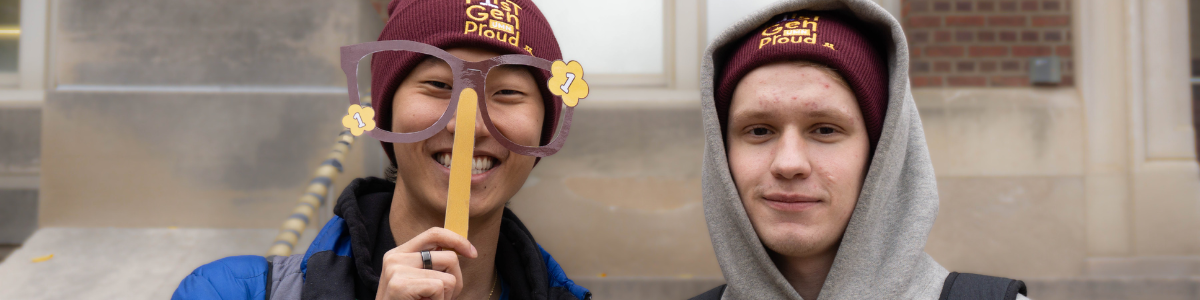
Your wellbeing is the foundation of everything you do. At the First-Gen Student Success Center, we’re here to support your mental, physical, and financial health—so you have the strength and balance to learn, thrive, and grow.
Taking Care of Your Body
General Care
University Recreation and Wellness (RecWell)
At RecWell, you can take advantage of fitness equipment, classes, health programming, and more. It is located on the East Bank campus and is open to all members of the University community.
Food & Nutrition
Nutritious U
Through the Nutritious U Food Pantry, you can access fresh and healthy foods for free. Any student can visit the food pantry, no proof of need is necessary; however, U Cards are scanned to track numbers.
Religious, Spiritual & Special Diets
M Dining can work with students individually regarding special dietary needs. Our Registered Dietitian can help you learn about available dining options on campus that fit your needs. If you’re living in a residence hall, we also suggest meeting with your dining hall's manager to review specific menu options.
Taking Care of Your Mind
Counseling, Therapy & Support
Need help now?
If you are in crisis and unable to wait for the next available scheduled appointment, Urgent/Crisis Counseling is available at Boynton Health’s Urgent Mental Health Care Clinic during clinic hours. It is located on the 4th floor of Boynton at 410 Church St. SE.
Boynton Mental Health & Counseling
Boynton Mental Health & Counseling provides private and confidential counseling and is offered for a variety of concerns, including personal issues, academic difficulties, and career uncertainty.
Group Therapy
Group therapy sessions are a safe, confidential space to share and explore concerns and learn new strategies for overcoming challenges.
Let’s Talk
Let’s Talk is a program that provides informal virtual and in person drop-in consultations for U of M students throughout the academic year. No appointment is necessary, so you can drop in during the scheduled times.
Let’s Talk is not a substitute for formal counseling and does not constitute mental health treatment, but counselors can listen to specific problems, provide support, help explore solutions and give information about other resources.
The Aurora Center
The Aurora Center for Advocacy and Education provides a safe and confidential space (in Appleby Hall) for students, faculty, and staff who are victims/survivors or concerned people of sexual assault, relationship violence, sexual harassment, or stalking.
Stress Management
Pet Away Worry and Stress (PAWS)
Interact with registered therapy animals—including dogs, bunnies, cats, chickens, and a miniature horse! PAWS is a safe, welcoming, and fun setting that is open and FREE to everyone who is part of the University of Minnesota community. No appointment is needed, and students are invited to attend PAWS as often as they can throughout the school year to interact with the therapy animals, their handlers, and other attendees.
Mindful Mondays
Drop in for a Mindful Monday session to unwind your mind with mind-body skills, meditation and light stretching! Mindful Mondays are free drop-in sessions held on Zoom from noon to 1 p.m. Central. Our experienced facilitators will guide you through a series of mindful movements and meditations that will leave you feeling rejuvenated. No prior experience or special clothing is necessary.
Accessibility, Disability, and Accommodations Help
The Disability Resource Center (DRC) works in collaboration with the University community to ensure access for all students. Students with disabilities may request accommodations to address barriers they anticipate or are presently experiencing through the DRC.
If you are currently a University of Minnesota student or are taking U of M courses, you can make an initial appointment by calling 612-626-1333.
What are accommodations?
An accommodation is a modification that is made to a course, program, service, job, activity, or facility that minimizes disability-related barriers to allow equitable access while maintaining the essential requirements.
Examples of accommodations:
- Testing accommodations such as additional time, a lower distraction room, or use of assistive technology
- Note taking assistance
- Sign Language interpreting or captioning
- Document conversion to create alternate text formats
- Access Assistants for students who need audio description, support with manipulation tasks, help with library materials, or other tasks
Spiritual Wellbeing
Connecting with religious and spiritual communities and practices may be important during your college experience. For many individuals, religion, culture, ethnicity, and other identities are inseparable.
Bakken Center for Spirituality & Healing Wellbeing
The Bakken Center aims to advance the health and wellbeing of individuals, organizations, and communities. The Center offers academic courses for credit, community programming, workshops, and more.
Holidays & Religious Observances
The University of Minnesota acknowledges the diverse religious and cultural observances that occur throughout the year. Students can obtain accommodations for religious holidays and observances from their instructors, supervisors, or other appropriate University authorities.
If you need religious accommodations, you should notify your instructor or supervisor in advance (if possible), review the Makeup Work for Legitimate Absences policy, and/or consult with Equal Opportunities Affirmative Action as needed.
Payment and Financial Aid Options
Financial Aid
Financial Aid
Many students qualify for some type of financial aid. Learn more about:
Other types of aid include:
Keep in mind that most financial aid awards require that you enroll in a minimum number of credits in order to receive the award. The minimum number of credits varies depending on the type of award.
Filling out the FAFSA
You can apply for financial aid using the Free Application for Federal Student Aid (FAFSA). All students are encouraged to submit the FAFSA, even if they think they may not be eligible for aid. You should submit the FAFSA each year you're in college to continue to receive financial aid. The FAFSA application becomes available on October 1 every year.
See Steps to Receive Financial Aid
Work-study awards
What is work-study?
Work study is a state and federally funded program that supports part-time jobs for students who need help to meet the costs of attending college. These awards are used to pay student workers on campus. Most student jobs can use work-study funds, but you should check with each office when you apply for a position.
Scholarships & Emergency Funds
Undergraduate Scholarships
The undergraduate scholarship search provides an individualized list of scholarships that you are eligible to apply for based on your student profile.
Undergraduate Scholarship Search
More Scholarships & Where to Find Them
Student Emergency Funds
What are emergency funds?
The University of Minnesota has created emergency funds to assist and support University of Minnesota students who encounter an unforeseen financial emergency or catastrophic event that negatively and severely impacts their academic success.
Undergraduate Child Care Assistance
There are a number of child care assistance grants and other funding for undergraduate student parents.
Estimating College Costs & Paying Tuition
Understanding the Cost of Attendance
There are many costs associated with attending college. On the One Stop website, you can find more information on the Cost of Attendance, Tuition, and Fees as an undergraduate student.